Showing posts sorted by date for query books. Sort by relevance Show all posts

10 LGTBQ+ Books You Should Have In Your Classroom Library

Have you ever read a book and thought, "wow I'm just like the main character"? Have you ever read a book and wished that one of the characters was a real person because they would be your best friend? Shouldn't everyone feel that way at one point or another? Having a diverse collection of books in your classroom library is extremely important. Often teachers can't control the list of books they teach to the whole class, but teachers can make sure that diverse books are available to meet the needs of their students. Here are some suggestions of LGTBQ+ young adult books that would make a great addition to any secondary classroom library. 


Clap When You Land by Elizabeth Acevedo: Camino and Yahaira are half-sisters, but neither has any idea the other exists until a plane crashes, taking their shared father with it. Camino, who lives in the Dominican Republic, was used to rarely seeing her father, while Yahaira, a lesbian who lives in New York City, knew her father took a lot of business trips. Finally meeting means piecing together his life of lies, but it also means finding someone who understands exactly what they're going through, and maybe that's exactly what they each need to help them get through it.

Will Grayson, Will Grayson by John Green: Two teens, one gay and one straight, meet accidentally and discover that they share the same name. The boys are complete opposites, but their lives become intertwined as one begins dating the other's best friend. The book is told from both characters’ point of view in alternating chapters. 

Aristotle and Dante Discover the Secrets of the Universe by Benjamin Alire Sáenz: Fifteen-year-old Aristotle (Ari) has always felt lonely and distant from people until he meets Dante , a boy from another school who teaches him how to swim. Ari’s world opens up while they discuss life, art, literature, and their Mexican-American roots. Additionally, the influence of Dante ’s warm, open family is shaping Ari’s relationship with his parents, particularly in regard to a family secret; Ari has an older brother in prison, who no one ever mentions. The story swells to a dramatic climax as Ari’s loyalties are tested, and he confronts his most deeply buried fears and desires. 

Carry On by Rainbow Rowell: It’s Simon Snow’s last year at the Watford School of Magicks, and it’s not going as planned. His magic, always unstable, has been even more unpredictable, which is bad news with the magical world’s most infamous bad guy after him. His girlfriend is distant, and he’s afraid he’ll lose touch with his best friend after graduation. But most unsettling of all, Simon’s frustrating, evil, pretty-sure-he’s-a-vampire nemesis/roommate hasn’t come back to school. Baz is probably just off plotting somewhere, but what if he’s really in trouble? And why does Simon care so much, anyway? 

The Henna Wars by Adiba Jaigirdar Bengali: Irish teen Nishat can be anything she wants to be—anything except a lesbian, that is. Her parents think she can simply "choose" to be straight. Nishat's childhood friend Flávia, a Brazilian Irish girl comes back into her life, and she instantly has a crush on her. Nishat needs to figure out if her all-consuming feelings are worth defying her parents over. 

The Gravity of Us by Phil Stamper: Cal is a Brooklyn teen and a social media phenomenon. When his passenger-pilot father gets the call from NASA to join a Mars probe program, Cal and his mother, who suffers from severe anxiety, have to move with him to Houston. Cal develops a crush on new neighbor Leon, who is battling depression. The boys fall in love but their parents are both competing for the same spot in NASA’s mission.

Cinderella is Dead by Kalynn Bayron: It’s 200 years after Cinderella found her prince, but the fairy tale is over. Teen girls are now required to appear at the Annual Ball, where the men of the kingdom select wives based on a girl’s display of finery. If a suitable match is not found, the girls not chosen are never heard from again. Sixteen-year-old Sophia would much rather marry Erin, her childhood best friend, than parade in front of suitors. At the ball, Sophia makes the desperate decision to flee, and finds herself hiding in Cinderella’s mausoleum. There, she meets Constance, the last known descendant of Cinderella and her stepsisters. Together they vow to bring down the king once and for all–and in the process, they learn that there’s more to Cinderella’s story than they ever knew.  

If I Was Your Girl by Meredith Russo: After surviving a brutal attack, Amanda moves from Georgia to Tennessee for the new school year. She plans to stay focused and get through senior year, but kind, attractive Grant causes a distraction that wouldn't be so bad if it weren't for her deepest secret. Amanda is transgender and no one in her new school knows. Amanda struggles to live the life of a “normal” teen. The story goes back and forth between present day and the past before Amanda moved. 

The Great American Whatever by Tim Federle: Sixteen-year-old Quinn Roberts is hiding from the world because her sister died in a car crash six months ago. Quinn is ready to give up his dreams of writing screenplays. Quinn’s best friend Geoff insists it’s time for Quinn to go out and have some fun. Geoff drags Quinn to his first college party, where instead of nursing his pain, he meets a good looking guy that he’s interested in. Quinn starts imagining a life where he’s a screenplay writer and living a happy life once again. 

The Black Flamingo by Dean Alta: Michael always knew that he was different in more ways than one. He would compare himself to the black flamingo of Cyprus. He was anatomically the same, but a standout amongst his flock. When he comes out during high school with uncertainties about what exactly his sexual preferences are, he’s faced with a lot of big questions related to his family, friends, and ultimately who he wants to be in the world as he prepares to take off to university.

Previously I wrote another post about this topic: 6 LGTBQ Books You Should Add to Your Classroom Library. Both lists of books are good for secondary students. If you have any YA book recommendations let me know. 


*This post contains some affiliate links. As an Amazon Associate I earn from qualifying purchases. This helps me pay for the cost of maintaining my website.  

3 Ways to Use Classroom Libraries with COVID Concerns

3 Ways to Use Classroom Libraries with COVID Concerns


Independent reading is a huge part of English classrooms. With COVID 19 lurking, English teachers need to make some changes to using their classroom libraries. Don’t worry though, with these simple steps, independent reading and book choice can absolutely continue in your classroom!  


Here are 3 ways to continue to use your classroom library with COVID concerns.


Digital Checkout System

Scholars love to peruse our books, touch them, read the back, flip through to see how many chapters, or to read a few pages to evaluate their interest. This feels like a big downfall with COVID, as we don’t want our students touching the books and returning them for someone else to touch. However, there is always a solution!  You can use a digital checkout system. There are some great ones for organizing classroom libraries and many of them are free! 


  •  Booksource or Libib are great choices. Even better, take the time to inventory your library in one of these systems and use it forever! It may take time in the beginning if your library is large, but totally worth it in the end. 

  • If you know you don’t have the time to set up something like a digital inventory, use Google Slides to introduce a few books at a time. You can have an image, a few pages, and the back cover! This sounds like a great project for students to do too! Can we say book reviews? Our students would be so proud if you were to reuse their work as a classroom library preview! 

  • Another option is using Google forms for check out. If a student wants to check out a book, have them fill out the form and then you can document check out, check in, and everything in between. Simple and effective. 

  • If you're going for simple, have students search titles and descriptions of books in your library on the Internet and that could still be touchless without any of the work on your end!


72 Hour Rule


Now that you have options for check out, let’s talk safety. When a child takes a book home during this pandemic, you may shudder by the thought of it being returned. However, COVID-19 is being studied in multiple settings and reports are claiming that the virus does not continue to live on paper or books after 72 hours. This is great news for classroom libraries. Here are some more ways to keep the library safe for everyone:


  •  Use clear contact paper for your covers so when it is returned the student simply wipes down the cover with a disinfectant wipe. Then it must go into quarantine before the next student can use it. Lysol and other sprays are not recommended, but you can also wipe down the book with a disinfecting wipe.

  • When a book is returned, have the student place it in a specific box for quarantine. You will need a few plastic boxes or you can even use ziplock bags! Mark the date on the plastic with a post-it or an expo marker! 

  • Make your procedures for checking in books clear and make check in days only on Mondays. This helps especially if you do First Chapter Friday, because the books could potentially stay in quarantine for a week making them even safer. If you always choose Monday, the time in quarantine is documented in a very organized way.


Go Digital


If you still feel uneasy about continuing to use your classroom library, there is always the option to go digital.


  • Check out digital library sites like getEpic.com, which has tons to choose from.

  • Find the tons of free PDFs online that are easily accessible. This is especially true for the classics.

  • Lastly, most libraries allow you to borrow ebooks. It may take a lesson or two, but students could easily keep reading your favorites from the safety of their personal devices. 


Safety is obviously number one priority, but students need to be reading. Some libraries remain closed and our students continue to see us as the experts on what they should be reading. (Of course, because we are!) Keep the recommendations coming and keep the books flowing.  Keep using your classroom library with COVID concerns, but do it with precaution and preparation!. COVID has changed our lives, but literacy lives on!


Flipgrid, Edpuzzle, Screencastify, Oh My!

                                            Flipgrid, Edpuzzle, Screencastify, Oh My!


Technology is fascinating and teachers are always trying to find the latest and greatest. Well, you’ve come to the right place!  Flipgrid, Edpuzzle, and Screencastify are three of the best tools for all ages of learners and easily accessible by teachers and students alike! Check out all of the details on these great tech platforms!


Flipgrid


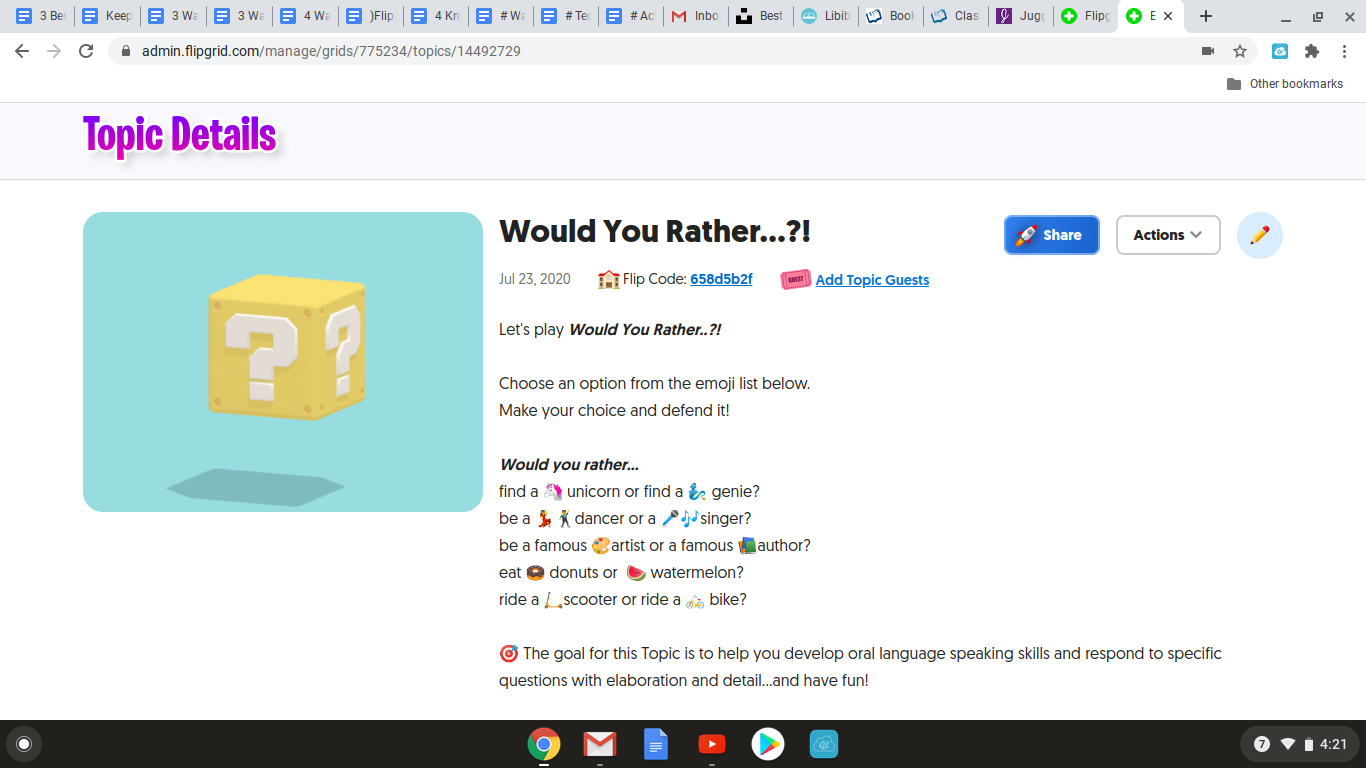
Looking for something original for your students? Flipgrid is totally the way to go. This platform allows students to respond in various prompts by using short videos of themselves. They can trim them, add stickers, and even take a selfie to use as the cover shot. The process is super simple and easy to follow. 


A few more tips to get started:

  • Your classes are called “grids” and students are given a code to join!

  •  When you post a topic, you control all aspects. 

  • There are various filters, you control student responses to one another and you can even preview videos before they post to your class. 

  • You can even link outside sources to your topics and students can do the same if they need support for what they are discussing!

  • You can check out the “Disco Library” for premade prompts to share with your class. 


Here are a few ideas on ways to use Flipgrid in your class!


  1. Build student portfolios. Allow students to reflect on their work by explaining what they have learned through the process. What a valuable tool!

  2. Reteaching! Mastery happens when you can teach someone else. Allow students an option of creating a video teaching a concept to prove they understand it fully!

  3. Guest Speakers! You can invite authors or really any valuable speaker to join and have conversations with your students through Flipgrid!

  4. Vocabulary work! Students record videos for their classmates defining new vocabulary words. This packs a punch in the learning department.

  5. Exit tickets get a brand new look! What a great way to reflect on what students have learned by using videos

  6. Speaking standards are definitely covered by using this tool!

  7. Icebreakers! What better way to meet your students! One of the classics is would you rather questions and you can find them in the library of resources already created!

  8.  Book Reviews! Check out the blog post: WAYS TO USE FLIPGRID TO SHOWCASE BOOKS to read even more about how to do this on Flipgrid!

Edpuzzle


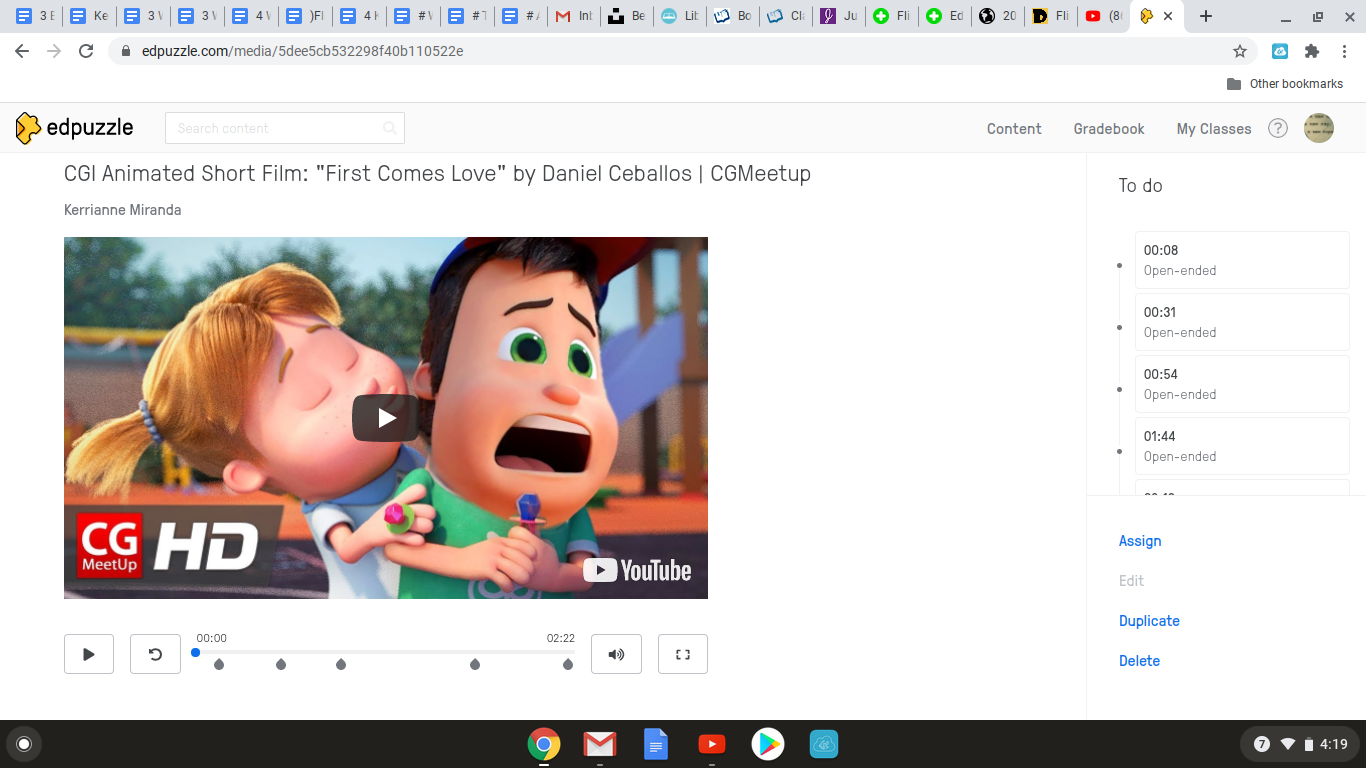
Edpuzzle.com is this exceptional tool that uses YouTube videos, Ted Talks,  Khan Academy, and your very own videos to teach all of your standards! The best part of Edpuzzle is the customized questions. There are editing tools that allow you to add the questions wherever you want students to stop and think and they are absolutely required for the student to move on. You can make multiple choice or short answer. There is also the option to copy videos from other Edpuzzle users (your own school included). You can copy videos with questions or without, but don’t worry if the questions don’t fit what you need, you can just edit them in your copy of the video!


Here are few of my favorite ways to use Edpuzzle:

  1. Teaching plot elements, or characterization with short animated videos. Think Pixar shorts or short CGI films! Check out, “Don’t Croak” by Daun Kim or “First Comes Love” by Daniel Ceballos for all of your plot needs! 

  2. Use music mashups to teach poetic elements. There are a bunch of already created YouTube videos to choose from!

  3. Edpuzzle videos are also great for substitute plans and engaging for the students too!

  4. Instructional videos created by me as a resource they can rewatch over and over again!


Edpuzzle takes the art of using videos to teach to the next level with the ability to use questions, edit and cut videos and there is even an option for voiceover. Check it out at: Edpuzzle


Screencastify


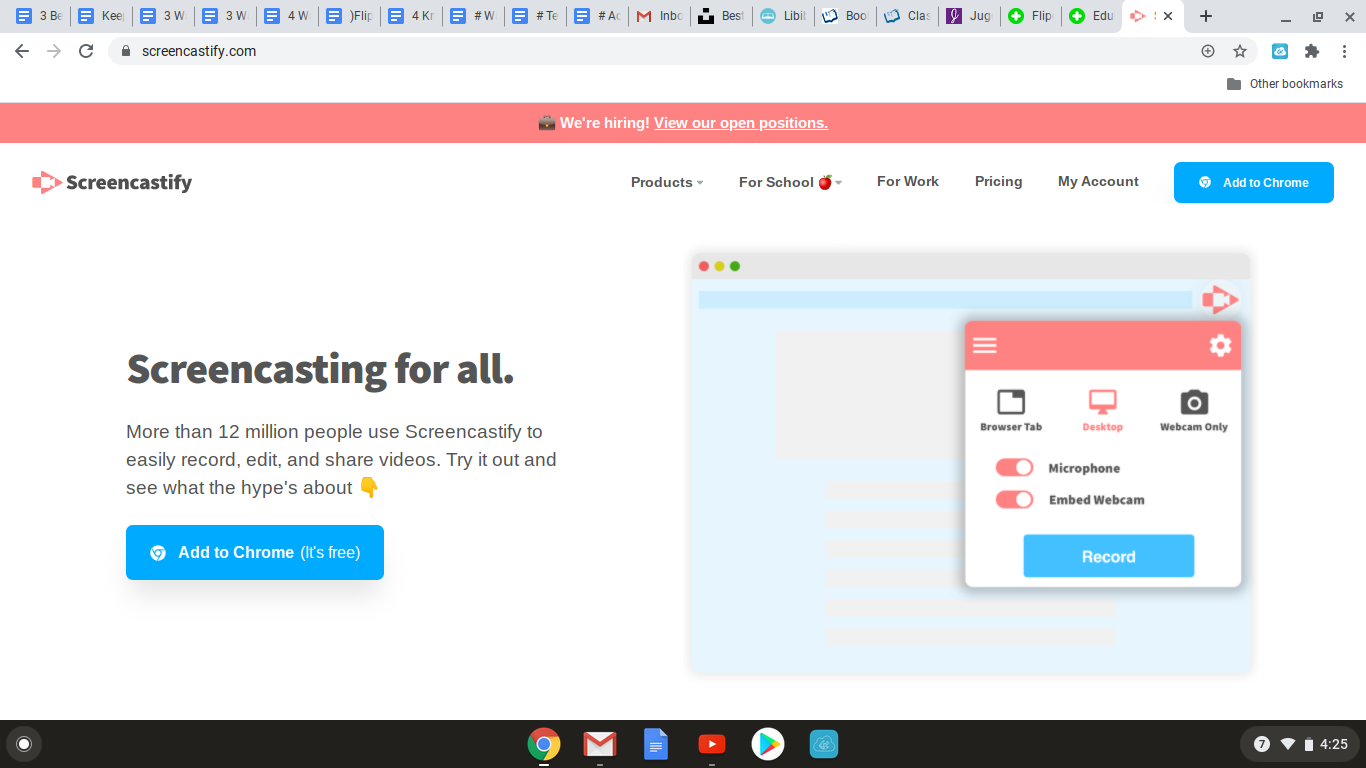
Oh my, this one is a staple in my teaching as well. Screencastify is a simple to use video recording tool. It simply records your screen as you are talking. Google Slides works well for this, but you can show anything on your screen! You can opt to use the camera option and you will appear on the screen as you talk through your lesson. The free version does limit how many minutes you have, but the paid version is completely unlimited. 


If you have ever thought about any of the following, you need screencastify:


  • Have you ever thought about flipping your classroom? You will need screencastify. These can be the instructional videos students watch at home to work the next day.

  • If you ever wanted to use instructional videos for students to work in stations with, screencastify is your new best friend. 

  • Ever wanted your own YouTube channel of resources? Use screencastify to create them!

  • Have a  substitute in the room, but want your students to hear your lesson? Screencastify it is!

  • If you want to use  Edpuzzle,  but with your own videos, you can screencastify and upload then upload them into Edpuzzle and add your custom questions!


The possibilities are endless with
Flipgrid, Edpuzzle and Screencastify. Using them all together in your teaching will put you at the top of your game and make our students excited about learning. Oh my!


The Importance of Independent Reading

When you're a young adult you're constantly being told what to do both at home and at school. It's amazing that more young adults aren't rebellious with all the rules forced upon them. If schools truly want to foster a love of reading, independent reading is a necessity. Students are constantly being told what to read and often the books that are considered part of the canon were by written predominately by white men.

In recent years there has been a push to add female authors and multicultural authors into the curriculum across the U.S. This varies from school to school and sometimes there's no rhyme or reason for the books selected. The classics are extremely important, I'd be the first one to tell you that I insist on teaching Shakespeare every year, but there's no reason why we can't teach a mixture of classical literature and modern literature. The students we teach should be able to find characters like themselves in the literature they read in school.

Being a teenager is a confusing time in one's life even if you're "normal" whatever that means. How would you feel if every book you read was written before you were born, before your parents were born? How would you feel if none of the characters were like you? How many books contain strong female protagonists? (Not a love interest, the main character.) How many books are being taught that have major characters that are multicultural? What about biracial? What about LGTBQ books? If we present literature written solely by white men, what are we telling students? Are we telling them that their gender, race, sexual preference, etc doesn't matter? Maybe reading a book about a gay character could help that student with their identity. Maybe reading a book with a strong female protagonist could give a young girl in your class more confidence. I remember having a student look at the book Persepolis and saying to me "the character looks like me" and she smiled. Why can't every student have that feeling?

I've heard people say that young adult books aren't rigorous enough which is silly. First get them to like reading and then build rigorous activities around the literature. Once they are readers you can vary the texts more. You can take a book that isn't a difficult book to read and you can still dive deeper into the text. I remember the first time I taught the book Speak by Laurie Halse Anderson. I had a group of "repeater 12th graders." (Yes they were actually called that.) These students were in high school for a 5th year and they didn't want to read. I remember reading the first chapter of Speak out loud and the students loved it. They wanted to know more about this high school girl. They could relate to either her or other students in the book. The same thing happened when I taught the book Monster by Walter Dean Myers to a group of 9th graders who were mostly reluctant readers. They wanted to know more about this 16 year old boy and how he ended up in jail. These aren't your stereotypical school books but why can't they be?

Maybe your administration forces you to teach a certain list of books. We've all been there. Maybe there's no room for books that aren't part of the cannon.That's why independent reading is extremely important. You can plan a trip to the school library or have diverse books in your own classroom library. The school's library media specialist can help you by giving book talks and giving students suggestions. In the past while in the school library every book that the librarian mentioned was checked out. You can require one independent reading book a marking period or one book a month. It's up to you. Why can't you read Shakespeare together as a class and they can read a book they enjoy in their free time? When students are given choices they take ownership. Why can't you have independent reading time once a week? If your school doesn't allow it, try once every other week.  If we truly want to cultivate lifelong readers, students need to read books that they are interested in.


Book Review: Spill Zone

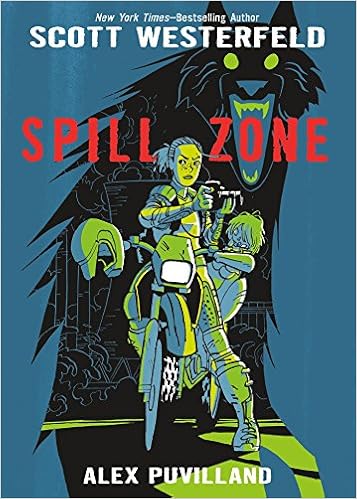
Spill Zone by Scott Westerfeld and Alex Puvilland takes place in Poughkeepsie, NY 3 years after the mysterious spill. The main character Addison illegally goes into the zone and takes pictures of the aftermath and sells them in order to survive. She acts as a parent to her sister Lexa that has been mute since the night of the spill. Lexa has a doll named Vespertine that she talks to and the doll needs to recharge in the zone. Addison is offered $1 million to get an object out of the hospital, but she’s hesitant about going in there because she fears seeing her parents.
While reading this book the saying “a picture is worth a thousand words” comes to mind because the graphics are beautiful. There is a big supernatural element to this story (a psychic connection to a doll, meatpuppets, other mysterious creatures in the zone, etc.) and this is truly shown through the drawings. I don’t think this story would be as good if it didn’t have the graphics.

This book would be a great addition to a secondary ELA classroom library. We should have a mixture of regular novels and graphic novels. I love that this book is a science fiction graphic novel and the pictures are incredible. There are two books so far (Spill Zone and Spill Zone Two) and I can't wait to see how the series continues.

6 Reasons Why the Public Library is a Teacher’s Best Friend

I know so many teachers who spend their own money on books, movies and an array of other materials for their classroom. Despite being paid a low salary and being on a budget, teachers often dig into their own pockets because sometimes it’s just easier and faster to just buy it.

There are many ways that the public library can be a teacher’s best friend. Here are a 6 reasons why every teacher should use the library.
  1. Seasonal/holiday books. Many teachers that teach primary grades like to use seasonal and holiday books. This might take some planning but if you’re organized you can utilize your local library for all of your seasonal/holiday needs. Just don’t wait until the last minute.
  2. Movies: My school always blocked youtube because there are some things on there that are not school appropriate. I used to use Netflix in my classroom but one day my school decided to block it because it was slowing down the server. Even if it wasn’t blocked, Netflix is constantly changing the content and you might find that a movie you want to show your class has disappeared. I don’t know about other schools but we’ve had plenty of days when the internet went down. I’d rather get the DVD from the library than have to deal with all of these issues. If your library doesn’t own the movie you need, they will interlibrary loan it for you. One time I wanted four different versions of Hamlet and my library got them for me.
  3. Audiobooks: We all have reluctant readers in our classes and audiobooks are a great way to help struggling readers. You can have them listen individually or you can use the audiobook with the entire class. You can get traditional CD audiobooks (I use the CD drive on my computer which is hooked up to the smartboard so the audio is excellent) or you can use the Libby app and play them on a device (iPad, phone, etc.)
  4. Summer Reading: Obviously every library is different but my local library collaborates with the schools in the area for summer reading. The library pulls the books that are on the summer reading list and keeps them on a cart for the convenience of the students. This way students can easily access the book(s) they have to read over the summer break.
  5. Databases: Your school library will have databases but the public library tends to have a better budget so they will have more databases. You can use these for your own research or have students use their own library card to use them. (If your school collaborates with the local library usually they bring library card applications to the school.)
  6. Collaboration: There are many ways that schools/teachers can collaborate with the local library. Here are a few suggestions:
  • Class projects
  • Library card applications
  • Library Visits 
  • Summer Reading
  • Author Visits
  • Other Events


Celebrating Holidays in the Classroom: Thanksgiving Edition

This is my first year as a Library Media Specialist and my first year working with younger students. I wanted to share some Thanksgiving books with my students but when I started reading picture books I found that some were historically inaccurate. Some of the books were portraying a one-sided story. I don't want to get into the gory details about what happened because the students are very young, but I didn't want to give them inaccurate information either. I figured if I was having issues finding good resources, others might be having the same issue as well. Here are some of the resources I've been using in my library.

If your school subscribes to BranPop, they have an excellent video about Thanksgiving that gives an accurate story without going into gory details. I showed this short video to some of my older students and then I received an email from BrainPop about the video that made me feel even better about the video. This is what BrainPop said, "Developed in collaboration with members and scholars of the Mashpee Wampanoag Tribe, our new Thanksgiving movie brings you the messy, fascinating, and sometimes painful roots of the classic American holiday. Watch the movie to share with students the real story of Thanksgiving." What I love about BrainPop is that they give you activities to go along with their videos. I've used a number of their videos in the classroom and in the library. 


One of the best books I found was from my local library, it was called Peppa Gives Thanks. No author is listed in the book but it's a Scholastic Book. I used this book with both Kindergarten and first grade. This book is not specifically for Thanksgiving but it talks about being thankful for what we have. I brainstormed a list with the students and I wrote everything that they said on the board for them to copy. I had students pick 3 things from the class list to put on their paper and I had them draw pictures of each of the items/people that they're thankful for. They came up with some really cute answers. 


Another really cute book that I found was called Turkey Trouble by Wendi Silvano. In this book, a turkey is trying to disguise himself as other animals in an attempt to not become Thanksgiving dinner. It was a funny book and my kindergarteners really enjoyed it. I created this handout to go along with the book. (Everything linked in this post is free). I like to have my kindergarteners trace words so that they can practice writing. The fonts I used are KG Fonts that are available here free for personal use.


With the middle grades (2nd and 3rd) I used the book Balloons Over Broadway by Melissa Sweet. This is a book about the Macy's Thanksgiving Day Parade. Before reading this book I asked students how many of them have watched the parade on TV. I was very surprised that many of them didn't know about it. I showed them some pictures of the balloons on my smartboard. I teach in NY so I was very surprised that they weren't familiar with the parade. For students who are unfamiliar with the parade, this book is a great way to introduce it to them. I have several students that now want to watch the parade on TV because of this book. After reading the book I had students design their balloon as a makerspace activity. 


With my older students, I used this free writing activity from Laura Candler. I also used this holiday-themed word search as an extension activity for students that finished early. After spending 17 years working with secondary students in the classroom, TPT has really been a lifesaver for me this year. 

Let me know what you do with your students for Thanksgiving in the comments below. Happy Holidays.   


7 Reasons Why You Should Download the App Libby

As an English teacher, one could imagine the amount of money I’ve spent on books in a lifetime. Take that number and multiply it by 3. I have a bookstore problem, which about 10 years ago became an ebook problem, and about a year and a half ago it became an audible problem. Books are expensive and most of the time I read a book only once. I do frequent my local library but the popular books always have a waitlist and I can be impatient. Also, it’s so convenient to download a new book on my Nook (I’m supporting a bookstore instead of a website) or on my audible app anytime I want.

About a year ago I was introduced to the app Libby. Libby is a free app that you download and create an account with your library card. You can use the Libby app or you can view the books on your Kindle or the Kindle app. There’s a workaround to get the books on your Nook but it involves your computer and a program called Adobe Digital Editions so I generally don’t do it. It’s faster to just use the Libby app. With the Libby app, you can download ebooks and audiobooks for FREE using your library card.

Reasons Why You Need Libby:

1. It’s FREE!!!! I’ve spent a small fortune on ebooks and audiobooks and I rarely read/listen to them more than once. Audible is great and if you’re a teacher and you want to use the audiobook every school year you might want to own the audiobook. If you’re reading/listening for fun you should consider Libby. It has definitely saved me some money in the past year.
2. It doesn’t use data. I have a bit of a commute to work and I listen to audiobooks in the car. I simply download the audiobook when I’m on wifi and then it simply plays on my phone without using data in the car. It does use my battery of course but I don’t have to worry about going over my data.
3. You don’t have to worry about late fees. After 14 days the book disappears from your device. Just like regular library materials you can renew them if no one is waiting. If there is a waitlist (this is mostly for newer materials and best sellers) they email you when it’s your turn.
4. You can’t lose or damage an ebook. We’ve all lost a book or damaged a book. We’re human. Last year I had a water bottle open in my bag and ruin a $30 library book. With Libby, you don’t need to worry about replacement costs.
5. If you want a book in the middle of the night you can get it. You don’t have to worry about library hours, bookstore hours or waiting to get a book in the mail. That’s great news for my fellow insomniacs.
6. You always have your phone on you. How many times have you been stuck waiting for someone or something? Instead of wasting time, you can pull out your phone and continue reading/listening to your book. You are more likely to have your phone on you than that bulky 500-page book you’re reading.
7. It’s great for traveling. I love to read on flights and who wants to take 2 or 3 books on vacation? With airlines charging more for luggage than in the past, we’re all trying to pack light. Having a small device is more convenient than carrying a few books.

Some people might say “Libby doesn’t have every book” which is true but you can always make suggestions for books at your local library. If it’s a 50-year-old book that no one has ever heard of they might not order it but you don’t know unless you ask. I’m not saying that I spent $0 on books since I started using this app but I have cut down tremendously on my spending.


Join my newsletter and get a free lesson plan.

Subscribe to get exclusive freebies, learn about sales, and be the first to learn about new content.

We won't send you spam. Unsubscribe at any time. Powered by ConvertKit